
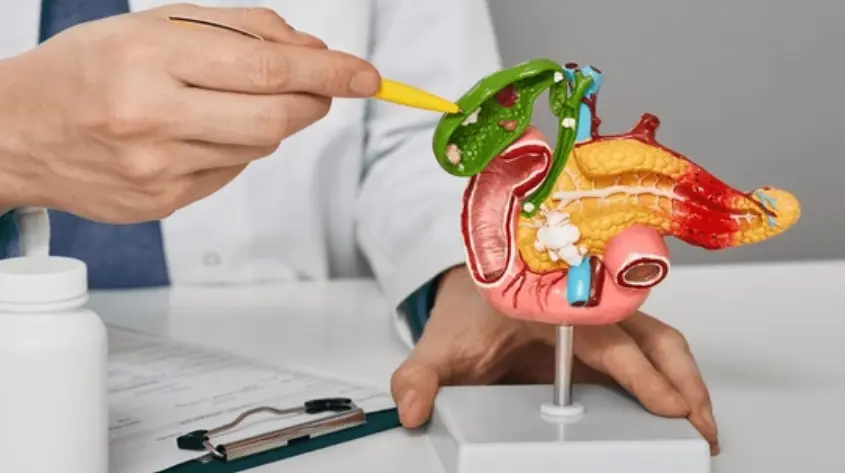
What the gallbladder and bile ducts do
The gallbladder stores bile made by the liver. After a meal, bile flows through ducts into the small intestine to help digest fat. Stones, sludge, inflammation or narrowing can stop that flow. Patients from Kokapet, Narsingi, Gandipet, Gachibowli, Manikonda and Financial District often arrive after weeks of “acidity” tablets that never settled the pain.
Dr. Anupama Swarna treats the medical and endoscopic side of biliary disease: confirming the diagnosis, treating duct stones when ERCP is indicated, and coordinating surgery when the gallbladder itself should come out.
Symptoms that point to biliary disease
Biliary colic
Sudden, severe pain in the right upper abdomen, often after fried or festive meals, lasting 30 minutes to a few hours.
Referred pain
Pain spreading to the right shoulder blade or back, with nausea or vomiting.
Jaundice warning
Yellow eyes or skin, dark urine, pale stools—suggests a blocked bile duct, not simple indigestion.
Infection or pancreatitis
Fever, chills, relentless vomiting or severe central pain needs urgent hospital care.
Conditions treated at the Kokapet clinic
- Gallstones (cholelithiasis) and biliary colic
- Choledocholithiasis — stones that have moved into the bile duct
- Cholecystitis — gallbladder inflammation
- Bile-duct obstruction from stones, sludge or selected strictures
- Gallstone pancreatitis work-up and duct clearance planning
- Post-meal pain wrongly labelled as acidity or gastritis
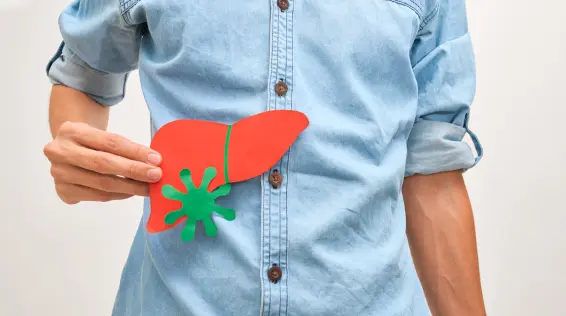
How diagnosis is planned
- History and exam. Meal triggers, duration, fever, pregnancy, previous scans and surgeries.
- Blood tests. Liver enzymes, bilirubin, blood counts and, when needed, amylase/lipase.
- Ultrasound. First-line test for gallbladder stones and duct dilatation.
- MRCP or CT if the duct looks blocked or the picture is unclear.
- ERCP when a stone or blockage in the duct needs treatment, not just pictures.
ERCP is not ordered for every incidental stone on a master health check. Dr. Anupama explains when watching, medicine, endoscopy or surgery is the safer path.
ERCP: when it helps
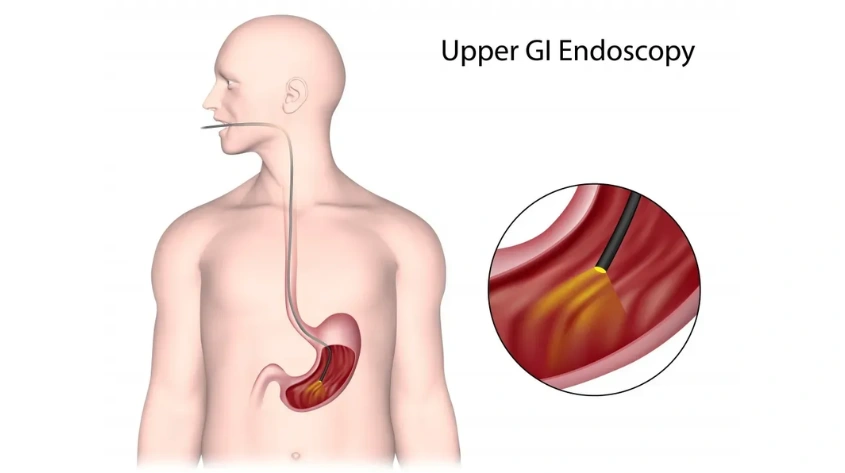
ERCP (endoscopic retrograde cholangiopancreatography) uses an endoscope and X-ray to look inside the bile ducts. It can remove duct stones or place a stent to relieve a blockage. You will be counselled about fasting, sedation, benefits and uncommon risks such as pancreatitis before the procedure is scheduled.
Surgery is sometimes needed — and sometimes not
A gastroenterologist manages the medical diagnosis and duct problems. A surgeon removes a diseased gallbladder when attacks repeat or complications appear. Silent stones without pain can often be observed with diet advice and follow-up. The clinic’s role is to stop guesswork: antacids will not clear a blocked duct.
What to bring to your visit
- Ultrasound, MRCP or CT films and reports
- Recent LFT and complete blood count
- List of medicines, including painkillers
- Notes on which foods trigger pain
Care for west Hyderabad
Jade Clinics is on the 3rd floor of MN Crux, above KFC, Power Welfare Society, Kokapet–Narsingi. Evening consults from 5:30 PM to 7:30 PM, Monday to Saturday, suit patients travelling from Khajaguda, Puppalaguda, Nanakramguda, Raidurg, Madhapur and Tellapur.
Frequently asked questions
What are the primary symptoms, and when should I see Dr. Anupama Swarna?
See a specialist for sharp right-upper abdominal pain after fatty meals, nausea, vomiting, or yellowing of the skin and eyes. Recurring “gas” that always starts after oily food also deserves a proper biliary review.
How are gallbladder and bile-duct problems diagnosed?
Blood tests check liver function. Ultrasound visualises the gallbladder. If the bile duct may be involved, MRCP or ERCP is considered. The sequence depends on jaundice, fever and scan findings.
What treatments can ERCP provide?
ERCP can remove stones stuck in the bile duct and place a stent to relieve obstruction. It is both a diagnostic and a therapeutic tool when imaging already suggests a duct problem.
If surgery is likely, what does the gastroenterologist still do?
She confirms the diagnosis, treats infection or pancreatitis risk, clears duct stones when needed, and works with a surgeon so the operation is timed safely.
Can gallbladder disease affect other organs?
Yes. A stone in the duct can cause pancreatitis or a serious bile-duct infection (cholangitis). Timely diagnosis is the main way to prevent those complications.
Does every stone on my health-check ultrasound need surgery?
No. Many people live with silent stones. Treatment is advised when there is pain, inflammation, jaundice, pancreatitis or high-risk features discussed in clinic.