
What is contraceptive counselling?
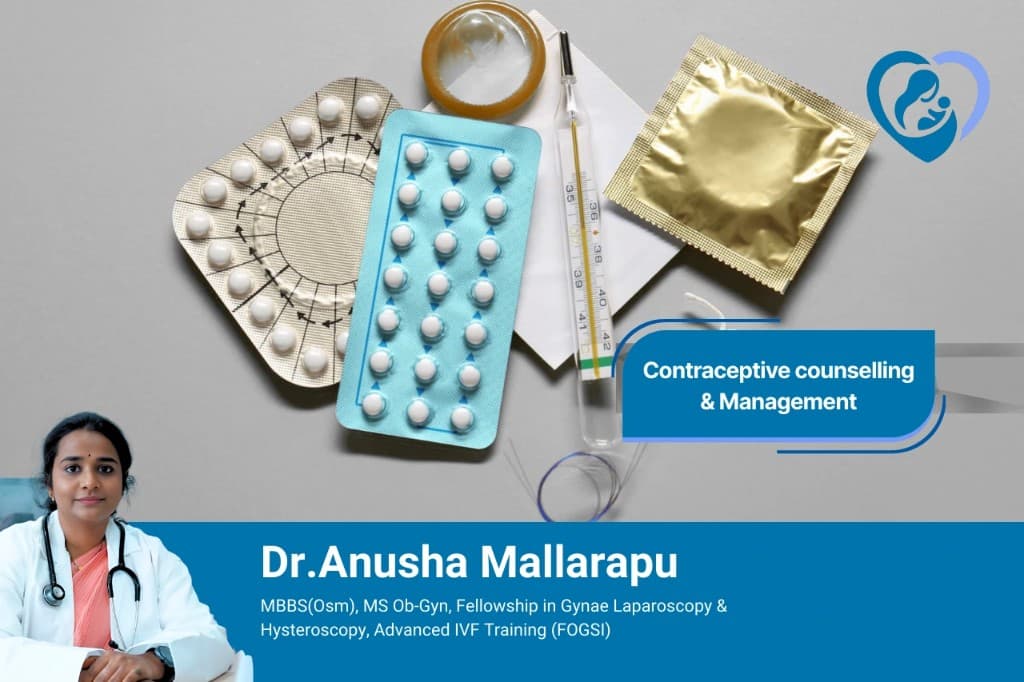
Contraceptive counselling is the visit where birth control is matched to you, rather than handed over as the method a friend uses. Pills, an intrauterine device, an injection, an implant, condoms, and permanent sterilisation prevent pregnancy in different ways, for different lengths of time, and with different effects on bleeding. A method that is safe for one woman is a poor choice for another because of migraine, a clot, breastfeeding, or a plan to conceive within the year.
The counselling covers how well the method works when it is used as intended, what happens if a pill is missed, and how soon fertility returns after you stop. It also covers what the method will not do. Most hormonal methods do not protect against sexually transmitted infection. Condoms do. That difference is said in the visit, not left as a footnote.
Dr. Anusha Mallarapu offers this in Puppalaguda as part of general gynaecology. Many methods can be started the same day if the history is clear and you are not pregnant. An IUD or an implant is fitted when you have chosen it and the timing is right. Sterilisation is permanent and is arranged at Bhoomi Hospital only after its own conversation.
How a method is chosen
The visit is a comparison, then a choice, then a plan for what to do if the method does not suit you.
What you want from it
Whether you want to prevent pregnancy for months, for years, or permanently comes first. So does whether you want periods to continue, lighten, or stop. A method chosen only for contraception can be the wrong one if heavy periods were the other problem you hoped it would solve.
What your history rules out
Blood pressure, migraine, smoking, clots, liver disease, and recent childbirth change which hormones are suitable. Breastfeeding changes the timing and the type. These are checked before a prescription, not after you have already started.
How you will actually use it
A daily pill works when it is taken daily. If shift work or travel makes that unlikely, a long-acting method is the more reliable suggestion. The best method on paper is the one you can continue.
A review date
Bleeding changes, mood, and pain in the first months are expected with some methods and a reason to switch with others. You leave knowing which symptoms to tolerate and which should bring you back. An IUD also has a check that it is still in place.
Methods that can be compared
These are the options discussed most often. You do not need all of them. You need the two or three that fit, with the differences said plainly.
Pills
Daily tablets that prevent ovulation or thicken cervical mucus, depending on the type. They can lighten periods. They have to be taken as directed, and vomiting or some other medicines make a pill less reliable. The missed-pill rule is explained for the packet you are given.
Intrauterine devices
A small device placed in the uterus at the clinic. Hormonal and copper devices last for years and can be removed when you want a pregnancy. Insertion is uncomfortable for a short time. You are told how to check the threads and when to come back if you cannot feel them or if pain and bleeding are heavy.
Injections and implants
An injection protects for a few months and has to be repeated on time. An implant is placed under the skin of the arm and lasts longer. Both are useful if remembering a daily pill is the problem. Bleeding can become irregular, and that is discussed before you start, not only after.
Permanent methods
Sterilisation for you, or a vasectomy for your partner, is permanent. It is discussed when you are sure you do not want another pregnancy, not as a reversible pause. The operation, if you choose it, is arranged at Bhoomi Hospital after consent on a day that is not rushed.
Who should book
Book when you need a method, when the one you have is causing trouble, or when you are about to stop it in order to conceive.
01
Starting contraception
A first method is easier to choose before you are already worried about a late period. Bring any preference you have, and the reasons you dislike others.
02
After a birth or a miscarriage
What is safe in the weeks after delivery depends on breastfeeding and on how the birth went. A method can be planned before you leave that decision to the six-week visit if you would rather decide earlier.
03
Side effects you are tired of
Spotting, headaches, low mood, or acne on the current method are reasons to switch, not reasons to stop contraception with nothing in its place unless that is what you intend.
04
A method that may have failed
Unprotected sex, a condom accident, or missed pills need advice promptly. Emergency contraception works better the sooner it is used. Call rather than waiting for a routine date.
Emergency contraception is time-sensitive. If you need it, say so when you call. It prevents a pregnancy from that episode. It is not a regular method, and you still need a plan for next time.
After a method is started
Counselling includes the weeks after the prescription, not only the choice on the day.
Emergency contraception
Pills, and in some cases a copper device, can be used after unprotected sex. Which one depends on how long ago it was and on your cycle. That is decided at the visit. Do not repeat leftover tablets from last time without asking.
Barrier methods
Condoms also reduce the risk of infection. They can be used alone or with another method. What to do if one breaks is part of the same conversation as the pill.
Follow-up for a device
An IUD is checked after insertion and removed or replaced when its time is up, or sooner if you want a pregnancy or if it causes pain. An implant is removed in the clinic when it expires or when you ask.
What happens at the visit
The history covers periods, pregnancies, migraines, blood pressure, smoking, and medicines. A pregnancy test is done if there is any chance you are already pregnant, because starting a method does not answer that question. Blood pressure is checked before an estrogen-containing pill.
If you choose a pill or an injection and it is safe to start, it can often be started the same day, with a written note of what to do if you miss a dose. An IUD or implant is fitted when there is time and when pregnancy has been excluded. If the visit is only for a decision, you can leave and book the fitting. You are not pressed to have a device inserted in order to finish the appointment.
What to bring
- The name of any method you use now, and what you dislike about it.
- A list of medicines, and whether you get migraine with visual symptoms.
- The date of your last period, and the date of unprotected sex if you need emergency contraception.
- If you are postpartum, whether you are breastfeeding and the date of the birth.
Call +91 63048 27743 or use the appointment form. The clinic confirms the time by phone or WhatsApp, Monday to Saturday. Say if the visit is urgent because of unprotected sex.
Why patients book contraception here
01
More than one method is actually compared
Pills, devices, injections, implants, condoms, and permanent options are discussed against your history. You are not offered only the method that is in stock that morning.
02
Fitting and follow-up stay in the clinic
An IUD or implant that is put in here can be checked and taken out here. You do not have to re-explain the choice to a new clinic for the removal.
03
The rest of gynaecology is the same doctor
Heavy periods, pelvic pain, or a plan to conceive later can change the method. Those problems are already part of this practice, so the contraception is not chosen in isolation.
04
Permanent means permanent
Sterilisation is described as irreversible and booked at the hospital only after that is understood. It is not presented as an easy reversible pause.
Questions about contraceptive counselling
01What does the counselling visit involve?
A history of your health, periods, and what you want from contraception, then a comparison of the methods that are safe for you. You leave with a choice, how to use it, and what should make you come back. A pregnancy test and a blood-pressure check are done when they change that choice.
02Which methods can be arranged here?
Pills, intrauterine devices, implants, injections, and advice on condoms. Emergency contraception is available when you are seen in time. Sterilisation is discussed in the clinic and, if you decide on it, arranged at Bhoomi Hospital. Not every method will be suitable for every history.
03How is the method chosen?
From your medical history, whether you can use a daily method, how you want your periods to behave, and when you might want a pregnancy. The advantages and the problems of the shortlisted options are explained before you decide. A method is not assigned without that conversation.
04Can an IUD be followed up here?
Yes. Insertion, a check that it remains in place, and removal are part of the same service. Come back if you cannot feel the threads, or if pain or bleeding is heavier than you were told to expect. Replacement is booked before the device expires.
05Why see a doctor rather than choose a method yourself?
Some methods are unsafe with migraine, a previous clot, smoking, or certain medicines, and that is not obvious from a packet. A clinic visit also sorts emergency contraception, checks you are not already pregnant, and gives you a follow-up if bleeding or mood is a problem. The aim is a method you can keep using safely.
06Where is the clinic?
Dr. Anusha Mallarapu Clinic is on the first floor of Ideal Investa, Road No. 13, Kundan Nagar Colony, Alkapoor Township, Puppalaguda, Hyderabad 500089. She also consults at Bhoomi Hospital, Plot No. 44, 46 and 48, Puppalaguda–Manikonda Road, near Tapovan Park.
07How do I book an appointment?
Call +91 63048 27743, email dranushamallarapu@gmail.com, send a WhatsApp message, or use the form on the Contact page. The clinic confirms the time by phone or WhatsApp.
08What should I bring to the first visit?
Bring previous prescriptions, scan and blood reports, a list of current medicines, and the questions you want answered. If this is a fertility visit, come with your cycle dates if you know them.
Sources
These public pages explain the topic in general. They are not a description of your own result or a treatment plan from this clinic.
Related notes
- 12 September 2026What happens at a pregnancy visit in PuppalagudaWhat a pregnancy visit with Dr. Anusha Mallarapu covers: history, checks, scans, and a birth plan aimed at a safe vaginal delivery.
- 14 September 2026When a pregnancy needs closer careWhat high-risk pregnancy means at this clinic: closer visits for diabetes, blood pressure, growth, and a delivery plan at Bhoomi Hospital.