
What are gynaecological cancers?
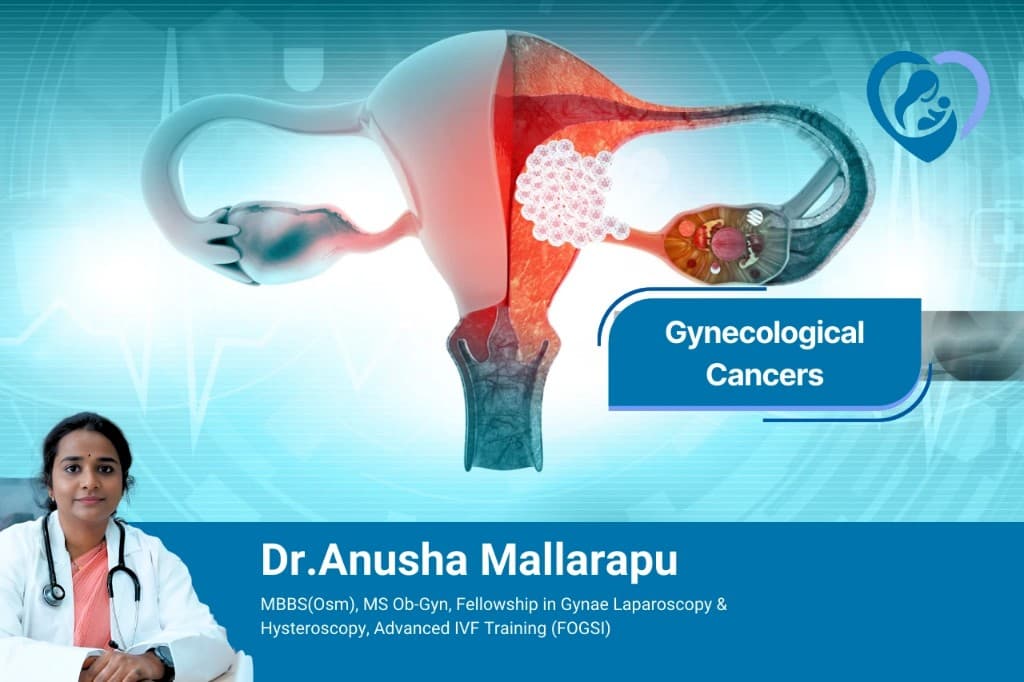
Gynaecological cancers are cancers of the female reproductive organs: the cervix, the uterus, the ovaries and fallopian tubes, and, less often, the vagina or vulva. They are not one disease. Cervical cancer is closely tied to long-standing HPV infection and is the one that screening is built to find early. Uterine cancer often announces itself with bleeding after menopause. Ovarian cancer is harder to feel early and is more often found when bloating, pain, or a scan raises the question.
Abnormal bleeding, pelvic pain, and a discharge that is new are reasons to be examined. They are also common for reasons that are not cancer. The visit is for sorting that out, not for deciding the diagnosis from the symptom. A Pap smear looks for cervical cell changes before they become cancer. An ultrasound, and a biopsy when the scan or the examination calls for one, is how a mass or a thickened lining is named.
Dr. Anusha Mallarapu provides this assessment in Puppalaguda. She does the screening, the examination, and the explanation of what a result means. For certain cancers she uses laparoscopy or hysteroscopy to diagnose or to treat, when a keyhole operation is the right procedure. Care that needs a gynae-oncology team, chemotherapy, or radiotherapy is arranged with that team rather than described as something one clinic visit can finish.
How a cancer concern is followed
The order is symptom or screening result, then a test that can name the tissue, then a plan. A scan report is not the last word.
The history
Bleeding pattern, pain, bloating, discharge, and whether you have been through menopause are written down. Previous Pap smears, HPV tests, and any scan already done are read in that visit. Family history of ovarian, uterine, or bowel cancer changes how quickly further tests are arranged.
Examination and a Pap smear
A speculum examination looks at the cervix. A Pap smear, and an HPV test when it is due, takes cells from the cervix. A bimanual examination feels the uterus and ovaries. You are told what each step is for, and you can stop. A chaperone can be arranged.
Ultrasound and biopsy
Ultrasound is used when bleeding, pain, or the examination suggests a problem in the uterus or ovary. A thickened uterine lining, a suspicious ovarian cyst, or an abnormal Pap smear is followed by a biopsy or a closer look, not by a label of cancer from the image alone.
The plan, including who else is involved
A benign or pre-cancer result is explained with the follow-up interval. A cancer diagnosis is explained in plain language, including which treatments are usual for that organ and stage. When the operation or the drug treatment belongs with a cancer team, that referral is made and you are told what Dr. Mallarapu will still do.
What this care includes
Screening, diagnosis, and selected operations sit in this practice. Treatment that needs an oncology unit is coordinated, not claimed as a single-handed service.
Cervical screening
A Pap smear looks for abnormal cells on the cervix. HPV testing shows whether the virus linked to those changes is present. An abnormal smear is a reason for a closer examination of the cervix, not an immediate cancer diagnosis. You are told what the report grade means and when the next test is due.
HPV vaccination and prevention
HPV vaccination lowers the chance of cervical cancer and is discussed for anyone still in the age range where it helps, including people who have not completed the course. Screening still matters after vaccination. Condoms reduce, but do not remove, the chance of acquiring HPV.
Uterine and ovarian assessment
Bleeding after menopause, very heavy bleeding, or a scan that shows a thick lining or an ovarian cyst is investigated with ultrasound and, when needed, a biopsy or hysteroscopy. Pain and persistent bloating are taken seriously even when an earlier scan was called normal.
Selected surgery
Laparoscopy and hysteroscopy are used to diagnose, and in selected cases to treat, disease in the uterus or pelvis. A cancer that needs a radical operation, chemotherapy, or radiotherapy is planned with a specialist team. You are told which of those applies before a date is set.
Who should book
Screening is for women who feel well. Some symptoms should not wait for a routine smear date.
01
A Pap smear that is due
If you cannot remember your last smear, or you were told to repeat one and did not, book the test. Cervical changes are easier to treat before they become cancer.
02
Bleeding that is not a normal period
Bleeding after menopause, bleeding between periods, or bleeding after sex needs an examination. Many of these are not cancer. They are still not left until the next annual visit.
03
Pain, bloating, or a mass
Pelvic pain that is new, a belly that stays bloated, or a lump you can feel is assessed with an examination and usually an ultrasound. An ovarian cyst on an outside scan can be brought in and read with the rest of the history.
04
An abnormal report you do not understand
A smear, HPV test, or biopsy report from another clinic can be explained here, including whether the next step is a repeat test, a procedure, or a referral.
Very heavy bleeding, pain with fever, or a symptom that is getting worse over days should be said when you call, so you are seen promptly rather than held for a screening slot.
Screening, diagnosis, and treatment
These are three different jobs. A normal smear does not investigate ovarian cancer, and a scan does not replace a biopsy.
What screening can find
Cervical screening finds cell changes and HPV on the cervix. It does not check the ovaries or the lining of the uterus. Bleeding after menopause still needs its own tests even if the last smear was normal. You are told which organ a test is actually looking at.
How a diagnosis is made
Examination, ultrasound, and a tissue sample are how a concern becomes a diagnosis. Dr. Mallarapu explains the report, the likely organ, and what stage means in ordinary language. She does not leave you to interpret a word such as “malignant” from a printed sheet.
Where treatment happens
Some diagnostic and treatment procedures are done with laparoscopy or hysteroscopy in this practice. Chemotherapy, radiotherapy, and operations that need a gynae-oncology theatre are arranged with the team that does that work. She stays the doctor who explains the plan and follows you alongside that team.
What happens at the visit
A screening visit is a history, an examination, and the smear or HPV test if one is due. You are told when the result will be back and what a normal or abnormal result would lead to. Vaccination is discussed if you have not had it and it is still useful.
A visit for a symptom is longer. The bleeding or pain is mapped, the examination is done, and an ultrasound is arranged if the pelvis needs to be seen. If a biopsy or hysteroscopy is the next step, that is explained as its own procedure, with what it can show and how you will feel afterwards, before you agree to a date.
What to bring
- Previous Pap smear, HPV, ultrasound, and biopsy reports, including ones from another clinic.
- The date of your last period, or the year your periods stopped.
- A note of the symptom: when bleeding, pain, or bloating started, and whether it is getting worse.
- Family history of ovarian, uterine, breast, or bowel cancer, if you know who was affected and at what age.
Call +91 63048 27743 or use the appointment form. The clinic confirms the time by phone or WhatsApp. Consultations are Monday to Saturday.
Why patients book this assessment here
01
Screening is done in the same clinic
Pap smears, HPV advice, and the examination are part of ordinary gynaecology here. You do not need a cancer diagnosis to book.
02
A result is explained before the next test
An abnormal smear or a worrying scan is translated into what it means and what the following step is. You are not handed a report and a list of possibilities.
03
Keyhole surgery where it fits
Laparoscopy and hysteroscopy are used for diagnosis and for selected treatment. The aim is a smaller operation and a shorter recovery when that operation is the right one.
04
A cancer team is brought in when it should be
Advanced treatment is planned with the specialists who give chemotherapy, radiotherapy, or radical surgery. The referral is part of the care, not the end of the conversation.
Questions about gynaecological cancers
01What is Dr. Mallarapu’s role if cancer is suspected?
She assesses symptoms, does screening and examination, and explains the diagnosis and the options. For cancers of the cervix, uterus, and ovary she arranges the right next test. When treatment needs a multidisciplinary cancer team, she works with that team and stays the doctor who talks you through the plan.
02What screening is offered?
Pap smears for cervical cell changes, HPV testing and vaccination advice, and a clinical examination. These find cervical problems early. They do not screen the ovaries. Bleeding after menopause or a suspicious cyst still needs its own tests.
03What if a test is abnormal?
She explains the report and the next step, which may be a repeat test, a closer look at the cervix, an ultrasound, or a biopsy. An abnormal smear is often a pre-cancer change. It is not the same sentence as a cancer diagnosis, and she will say which one it is.
04Does she operate for gynaecological cancer?
She performs laparoscopy and hysteroscopy for diagnosis and for selected treatment, where a minimally invasive operation is appropriate. Operations, chemotherapy, or radiotherapy that belong in a gynae-oncology unit are referred. You are told which path applies before anything is scheduled.
05Why does early detection matter?
Cervical changes found on a smear can be treated before they become cancer. Uterine cancer found after a single episode of postmenopausal bleeding is more often at a stage where surgery can remove it. Waiting on a symptom that is already changing removes that advantage.
06Where is the clinic?
Dr. Anusha Mallarapu Clinic is on the first floor of Ideal Investa, Road No. 13, Kundan Nagar Colony, Alkapoor Township, Puppalaguda, Hyderabad 500089. She also consults at Bhoomi Hospital, Plot No. 44, 46 and 48, Puppalaguda–Manikonda Road, near Tapovan Park.
07How do I book an appointment?
Call +91 63048 27743, email dranushamallarapu@gmail.com, send a WhatsApp message, or use the form on the Contact page. The clinic confirms the time by phone or WhatsApp.
08What should I bring to the first visit?
Bring previous prescriptions, scan and blood reports, a list of current medicines, and the questions you want answered. If this is a fertility visit, come with your cycle dates if you know them.
Sources
These public pages explain the topic in general. They are not a description of your own result or a treatment plan from this clinic.
Related notes
- 12 September 2026What happens at a pregnancy visit in PuppalagudaWhat a pregnancy visit with Dr. Anusha Mallarapu covers: history, checks, scans, and a birth plan aimed at a safe vaginal delivery.
- 14 September 2026When a pregnancy needs closer careWhat high-risk pregnancy means at this clinic: closer visits for diabetes, blood pressure, growth, and a delivery plan at Bhoomi Hospital.