
What is personalised pregnancy care?
Personalised pregnancy care means the check-ups, scans, and birth plan follow your health and this pregnancy, not a single script used for everyone. Blood pressure, blood sugar, the baby’s growth, and how you feel are reviewed at intervals through the months. The point of repeating those checks is to notice a change early, while there is still time to adjust the plan.
The usual aim is a safe vaginal birth. That includes talking about labour pain before you are in labour. An epidural can be used for pain relief when it is suitable and when you want it. It does not replace a decision about whether a vaginal birth is safe. If a caesarean becomes the safer route, that is said clearly, with the reason, rather than being treated as a failure of the plan.
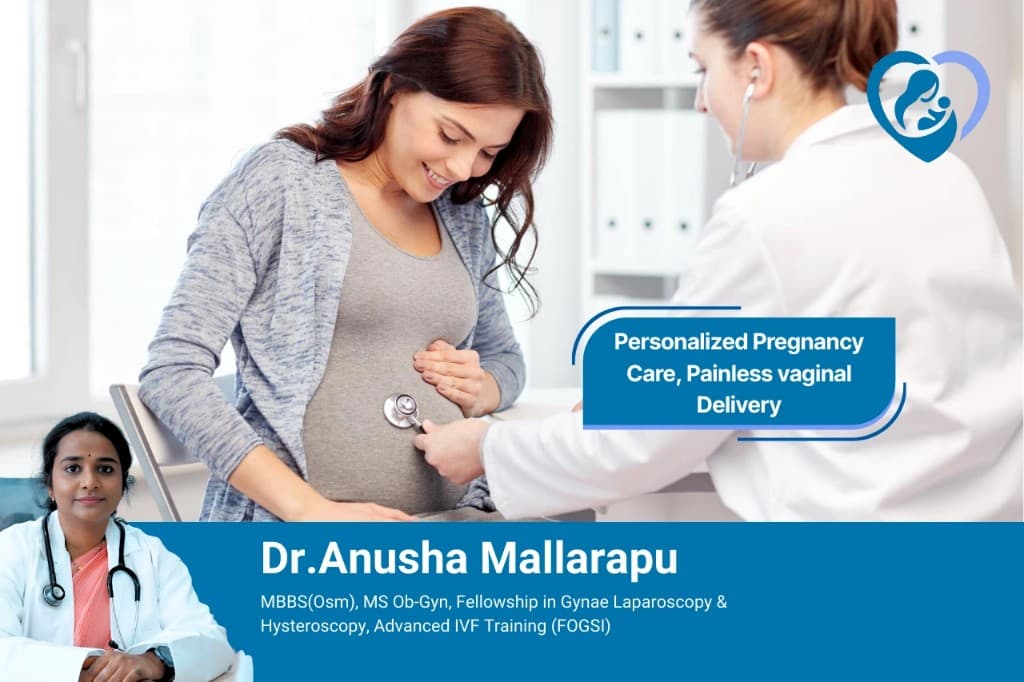
Dr. Anusha Mallarapu provides this care in Puppalaguda. Antenatal visits are at her clinic, and delivery is arranged at Bhoomi Hospital, so the same doctor who has followed the pregnancy is the one who attends the birth. The plan covers pregnancy, labour, and the first weeks after the baby is born.
How a pregnancy is followed
Visits are spaced through the months. Each one has a job, and the birth plan is updated when a result changes what is safe.
The booking visit
The first visit takes the history: previous pregnancies, medical problems, medicines, and how this pregnancy was dated. Blood tests, a blood-pressure check, and the first scan are arranged from that history. You leave knowing the next date and what that visit is for.
Routine antenatal checks
Later visits review weight, blood pressure, urine, baby’s movements, and the scan or blood results that are due at that stage. Nutrition, work, travel, and common symptoms are discussed in the same appointment, not saved for a separate class unless you ask for one.
The birth conversation
In the later months the plan for labour is written down: where you will deliver, who to call when contractions start, what pain relief you want to consider, and which findings would change a vaginal birth into a caesarean. The plan is revisited if the baby’s growth or your blood pressure changes.
Labour and the days after
In labour the baby is monitored and you are looked after by the same obstetric team. After the birth, feeding, bleeding, pain, and mood are reviewed before you go home, with a follow-up at the clinic for recovery rather than a single discharge talk.
What the care includes
These are the parts of a routine pregnancy in this practice. A pregnancy that becomes high risk is followed more closely, not dropped from the plan.
Antenatal check-ups
Scheduled visits through the pregnancy to watch your health and the baby’s growth. The interval shortens in the last weeks. You are told which symptoms, such as a severe headache, bleeding, or reduced movements, should not wait for the next date.
Food, iron, and daily life
Diet advice is tied to your blood results and symptoms, including nausea, heartburn, and anaemia, rather than a generic list. Supplements are recommended when a test or the stage of pregnancy calls for them. Work and rest are discussed from what your job actually involves.
Scans and tests
Ultrasound is used to date the pregnancy, look at anatomy, and later to check growth and fluid. Blood tests screen for anaemia, blood sugar, and infections that change treatment. A result is explained at the next visit, or sooner if it needs a change of plan.
When the pregnancy needs more
High blood pressure, diabetes in pregnancy, a baby who is growing slowly, or a previous complicated birth are reasons for closer visits and a hospital plan. That care stays with Dr. Mallarapu, with delivery at Bhoomi Hospital.
Who this care is for
Book when you know you are pregnant, or when you want a doctor to confirm the pregnancy and start the record. You do not need to wait for a problem.
01
A first pregnancy
The booking visit is the time to ask how often you will be seen, which scans are usual, and what a vaginal birth involves. Those questions are easier before the third trimester.
02
A pregnancy after a difficult birth
A previous caesarean, heavy bleeding, or a baby who needed extra care changes this birth plan. That history is taken at the first visit so it is not discovered in labour.
03
You want to talk about labour pain
If you hope to use an epidural, or you want to know what else is available, that preference is written into the birth plan while there is time to explain it. It is not a decision to make for the first time between contractions.
04
A result that worried you
An outside scan or a high blood-sugar reading can be brought to the clinic and read in the context of the rest of the pregnancy, instead of being interpreted from the report alone.
Bleeding, severe pain, a sudden headache with swelling, or a clear drop in the baby’s movements should be said when you call, so you are seen promptly rather than held for the next routine date.
Labour, monitoring, and recovery
The birth plan is only useful if it still makes sense on the day. These are the three parts that are agreed before labour.
Pain relief in labour
Painless vaginal delivery, in this practice, means labour analgesia such as an epidural when you want it and when it is medically suitable. It reduces labour pain. It does not remove every sensation, and it is not offered if it would be unsafe. Other ways of coping with contractions are explained as well, so epidural is a choice rather than the only path.
Watching the baby in labour
The baby’s heart rate is monitored through labour so a change is seen while there is time to act. Monitoring is matched to the pregnancy: a straightforward labour is not watched in the same way as a labour after a complication. You are told what the tracing means if it changes the plan.
The weeks after birth
Before discharge you are advised on bleeding, pain, feeding, and mood. A clinic review follows for physical recovery and for questions that only appear once you are home. Low mood, fever, or bleeding that becomes heavy again are reasons to call rather than wait for that review.
What happens at an antenatal visit
A routine visit checks how you are, how the baby is moving, and the measurements due that day: blood pressure, weight, and urine, with a scan or blood test when one is scheduled. The fundal height or the scan is used to see that growth is continuing. Medicines and supplements are reviewed so you are not taking something that no longer fits.
Bring questions in writing if you tend to forget them in the room. The birth plan is updated when something material has changed, not reprinted at every visit. If a test is sent out, you are told when the result will be back and whether you need to call for it.
What to bring
- Previous pregnancy notes, scan reports, and blood results, including those from another clinic.
- A list of medicines and supplements you are taking now.
- The date of your last period, or the date you were given for delivery.
- Questions about feeding, work, travel, or pain relief that you want answered this visit.
Call +91 63048 27743 or use the appointment form. The clinic confirms the time by phone or WhatsApp. Antenatal visits are Monday to Saturday. Delivery is arranged at Bhoomi Hospital.
Why patients book pregnancy care here
01
The same doctor through pregnancy and birth
Antenatal visits are with Dr. Mallarapu, and the delivery is arranged with her at Bhoomi Hospital. Your notes do not restart with a new team on the day.
02
A vaginal birth is the aim when it is safe
The plan is written toward a normal delivery, including pain relief, and it is changed when a caesarean is the safer birth. Both decisions are explained before they are needed.
03
Results are read in the visit
Scans and blood tests are tied to the next decision, not filed as numbers. You are told what a result means for this pregnancy.
04
Care continues after the birth
Feeding, recovery, and mood are part of the same practice, with a follow-up at the clinic rather than an open-ended discharge.
Questions about pregnancy care
01What is included in pregnancy care here?
Antenatal check-ups, advice on food and supplements, scans and blood tests at the usual points in pregnancy, and a birth plan. The same doctor follows you through labour at Bhoomi Hospital and reviews recovery afterwards.
02What is a painless vaginal delivery?
It means a vaginal birth with medicine for labour pain, most often an epidural, when you want that and when it is safe. Dr. Mallarapu explains the option during pregnancy so the decision is not made for the first time in advanced labour. It supports a vaginal birth. It does not guarantee that every pregnancy can or should end that way.
03How is the pregnancy monitored?
With scheduled visits, blood pressure and blood tests, and ultrasound for dates, anatomy, and growth. A result that needs action is dealt with when it comes back, rather than being left until the following month. You are also told which symptoms should prompt a call between visits.
04Is a normal delivery encouraged?
Yes, when it is medically safe. Previous births, the baby’s position and growth, and your blood pressure are part of that judgement. If a caesarean is safer, that is recommended directly, with the reason.
05Is there advice after the birth?
Yes. Before you leave hospital you are advised on bleeding, pain, feeding, and mood. A clinic visit follows for recovery. Call if bleeding increases, you have a fever, or low mood is not lifting, rather than waiting for the review date.
06Where is the clinic?
Dr. Anusha Mallarapu Clinic is on the first floor of Ideal Investa, Road No. 13, Kundan Nagar Colony, Alkapoor Township, Puppalaguda, Hyderabad 500089. She also consults at Bhoomi Hospital, Plot No. 44, 46 and 48, Puppalaguda–Manikonda Road, near Tapovan Park.
07How do I book an appointment?
Call +91 63048 27743, email dranushamallarapu@gmail.com, send a WhatsApp message, or use the form on the Contact page. The clinic confirms the time by phone or WhatsApp.
08What should I bring to the first visit?
Bring previous prescriptions, scan and blood reports, a list of current medicines, and the questions you want answered. If this is a fertility visit, come with your cycle dates if you know them.
Sources
These public pages explain the topic in general. They are not a description of your own result or a treatment plan from this clinic.
Related notes
- 12 September 2026What happens at a pregnancy visit in PuppalagudaWhat a pregnancy visit with Dr. Anusha Mallarapu covers: history, checks, scans, and a birth plan aimed at a safe vaginal delivery.
- 14 September 2026When a pregnancy needs closer careWhat high-risk pregnancy means at this clinic: closer visits for diabetes, blood pressure, growth, and a delivery plan at Bhoomi Hospital.