
Clinic note
How a follicular study times ovulation
A follicular study is a series of ultrasound scans through one menstrual cycle. Ovulation is timed from the follicle on the scan, not from a fixed day of the month.
- Published
- Written by
- Dr. Anusha Mallarapu
- Reading time
- 1 min read
- Related care
- Follicular study
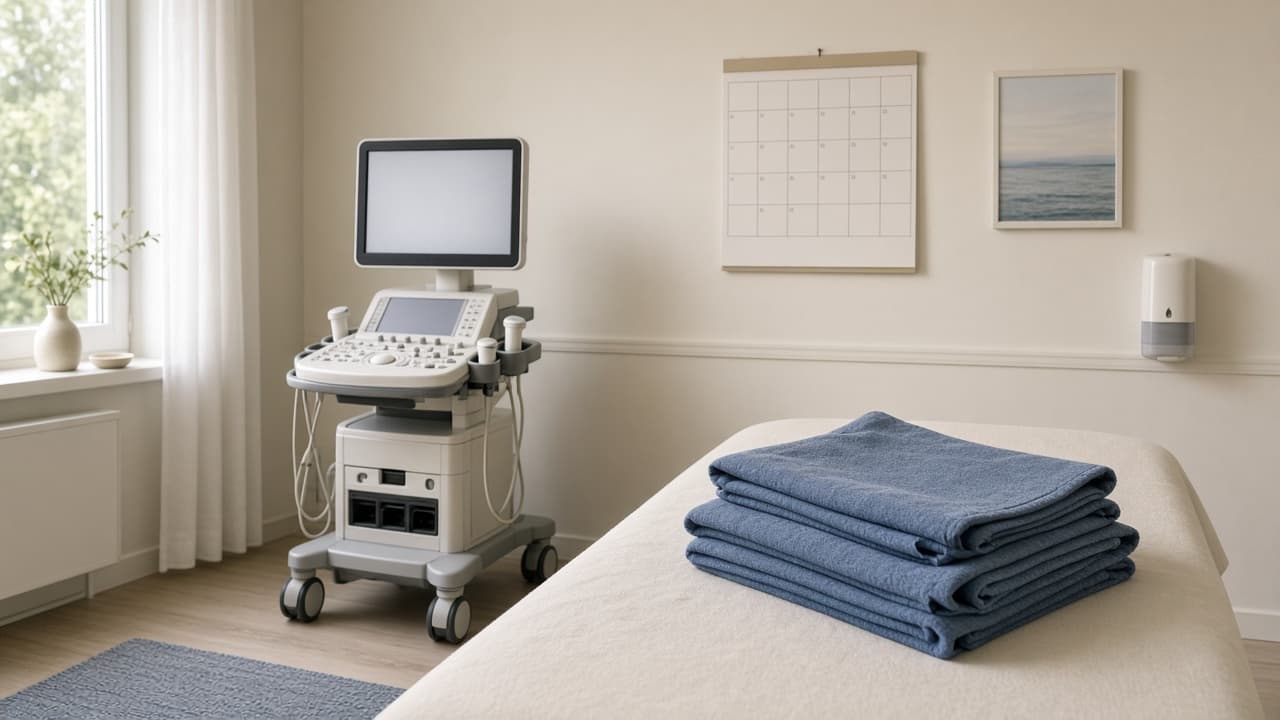
What does the scan follow?
The scan follows a follicle as it grows and looks for signs that ovulation is close or has happened. Visits are usually every one to three days once monitoring has started.
The study often starts around cycle day 2 or 3, then continues until the follicle is mature or ovulation has been seen.
Why not use a calendar day?
Ovulation can be early or late. A fixed cycle day, without a scan, can miss the egg. Insemination, a trigger injection, or timed intercourse has to fall close to ovulation.
A trigger injection is used when it helps pin ovulation to a known hour. You leave that visit knowing the timing for the next two days.
Who is a follicular study for?
It is used when a couple is trying to conceive naturally, when IUI needs a day, or when fertility medicines need to be judged on what this cycle actually shows.
The scan does not by itself start a treatment. It tells the clinic which day matters.
Questions
Is a follicular study the same as a one-time pelvic scan?
No. It is a series of scans across one cycle so the follicle can be followed, not a single picture.
Where is the study done?
Follicular studies are part of fertility care at the Puppalaguda clinic. Call the clinic to confirm a cycle start date.
More notes
All notes What happens at a pregnancy visit in PuppalagudaWhat a pregnancy visit with Dr. Anusha Mallarapu covers: history, checks, scans, and a birth plan aimed at a safe vaginal delivery.Read the note
 When a pregnancy needs closer careWhat high-risk pregnancy means at this clinic: closer visits for diabetes, blood pressure, growth, and a delivery plan at Bhoomi Hospital.Read the note